
síntesis
Investigación que reúne el trabajo de 12 artistas que abordan de forma crítica diversos territorios, historias materiales y ecosistemas de distintos lugares del planeta, investigando el tiempo profundo, el clima y la extracción.
Con las investigaciones sonoras de Ana Hernández, Anahita Norouzi, Bárbara Foulkes, Carlos Edelmiro, Concepción Huerta, Erika Loana (Atlas Materia Prima), Emilija Skarnulyte, Hanae Utamura, Lorena Mal, Long Pan, Perla Mata y Sofia Acosta.
summary
A research project bringing together the work of 12 artists who critically engage with diverse territories, material histories, and ecosystems from different parts of the globe, exploring deep time, climate, and extraction.
Featuring sound-based works by Ana Hernández, Anahita Norouzi, Bárbara Foulkes, Carlos Edelmiro, Concepción Huerta, Erika Loana (Atlas Materia Prima), Emilija Skarnulyte, Hanae Utamura, Lorena Mal, Long Pan, Perla Mata, and Sofia Acosta.
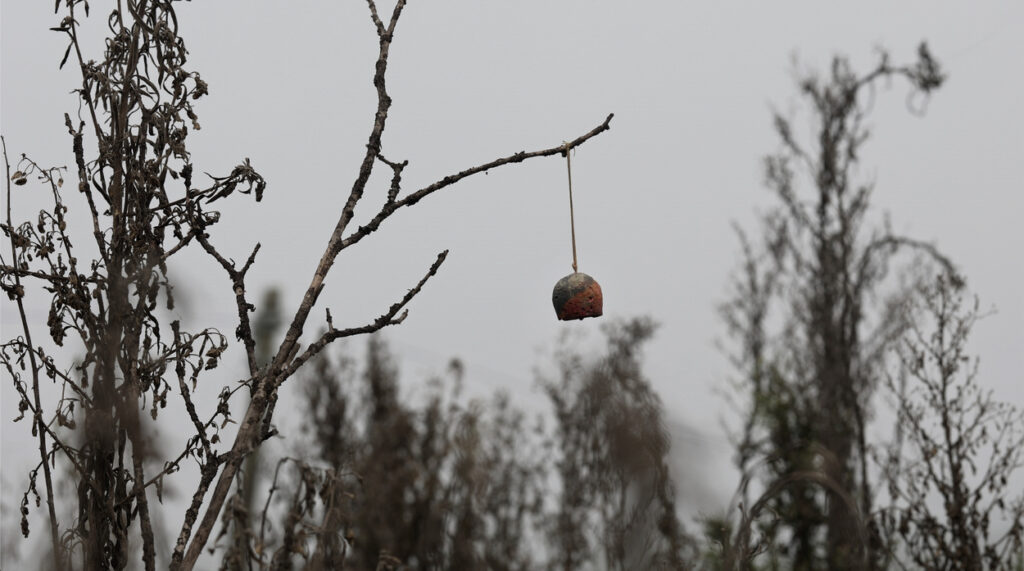
[Image: Long Pan, Wind Bell, 2021. Video + installation; single channel video, HD, color, 14 ’9”, copper bells; plant ash; Circuit boards]
In ancient times, copper slept inside the mountains
First as magma
now fills our soil, plants, and even human hair and placentas
scattered as residues from copper ore mining
We are in Guiyu, a small town located on the outskirts of Shantou, China
Declared the most toxic place on Earth
The wind chime coexists with this land
The wind sounds terraform into the sound of an ancient ocean
We are in Tepexi de Rodríguez, in Mexico
In the top of a mountain, of a fossil landscape
Where stones speak
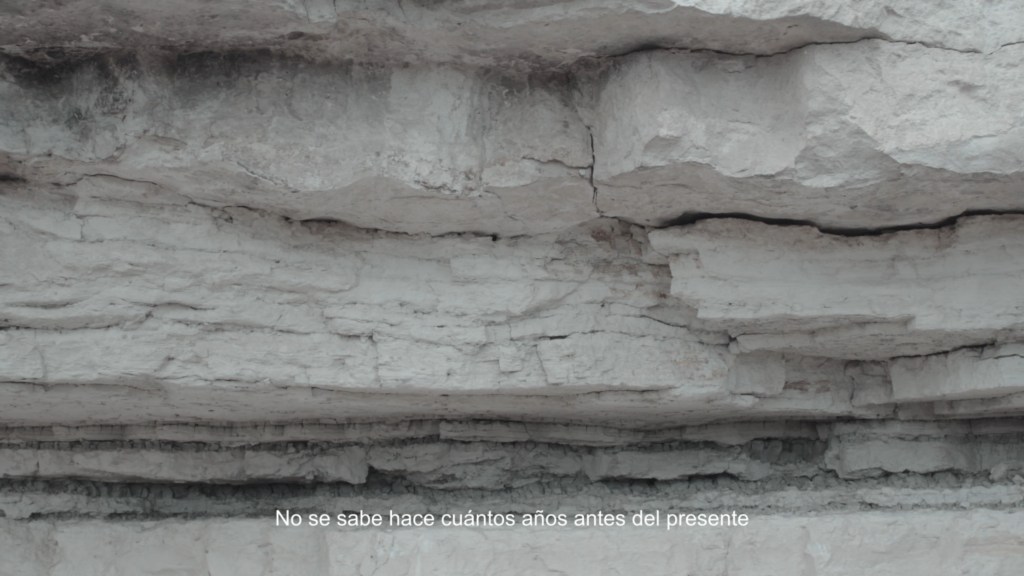
[Image: Lorena Mal, Piedra Partida, 2024-2025. HD video, color, 19′]
We submerge into the depths
into a mine in Poland under the sea
Toxic debris everywhere, we go further.
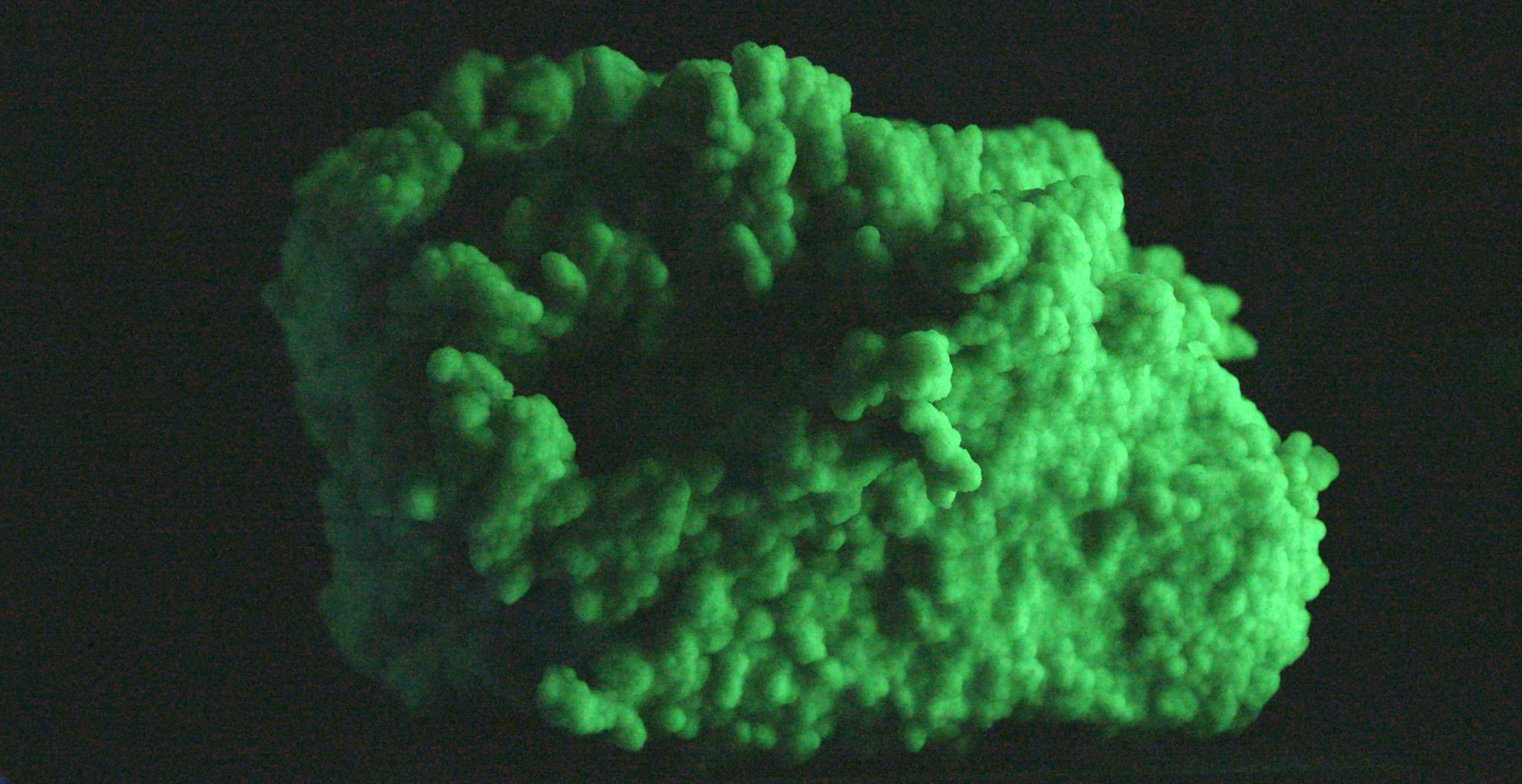
[Image: Emilija Skarnulyte, Burial, 2022. HD video, color, 60′]
Further into the last glacier in Mexico, the Chichonal volcano, boiling
bubbles and small gurgles of hot water and calcified stone
a vast body sleeping beneath the surface
a fragile body of rocks that appeared solid
but the volcano’s heat renders them hollow
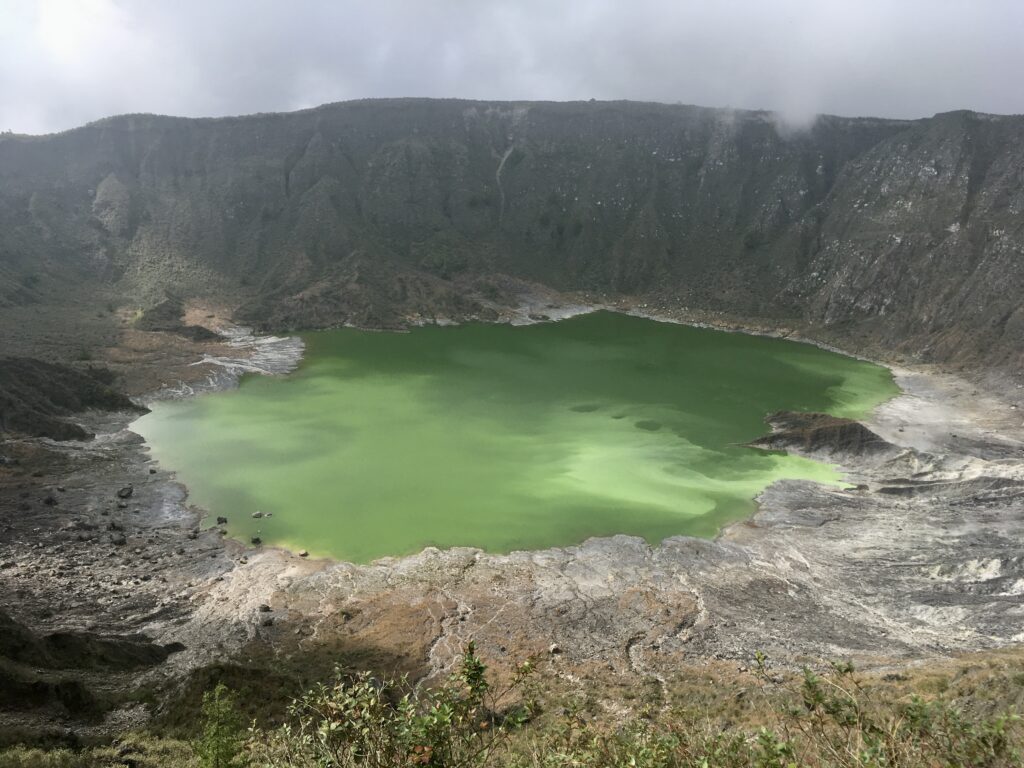
[Image: Field recordings of Chichonal Volcano from the archives of Carlos Edelmiro]
hollow
a drill goes further into a mountain making a void for more toxic residues
the walls of an underground tunnel in Lithuania
the Ignalina Nuclear Power Plant
the sounds of the volcano’s insides boil stronger
something breathes in the night
like a night hunting under the soil
into a geologic body in the mountains of Iran
the drillings of the British Petroleum Company
the sound frequencies that seek for oil, thirsty
a sonar that travels in stone just as a whale’s call would travel in the ocean
an ancient sea full of future fossil bodies
exploited and burned
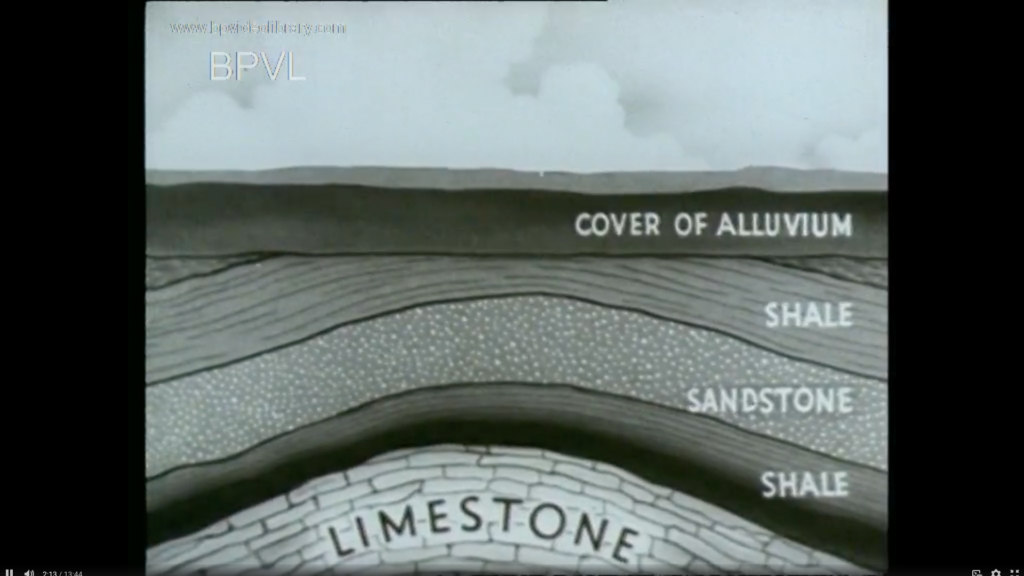
[British Petroleum Archives, research by Anahita Norouzi on Iran fossil territories]
the mountain opens into fossils
we listen the stones of Tlayúa Quarry in the mixtecan territory in Mexico
we drown in the Axamilpa river, the last remaining body of water
we listen, to the wind chime again moving with the tides
the ocean returns
the world is flooding
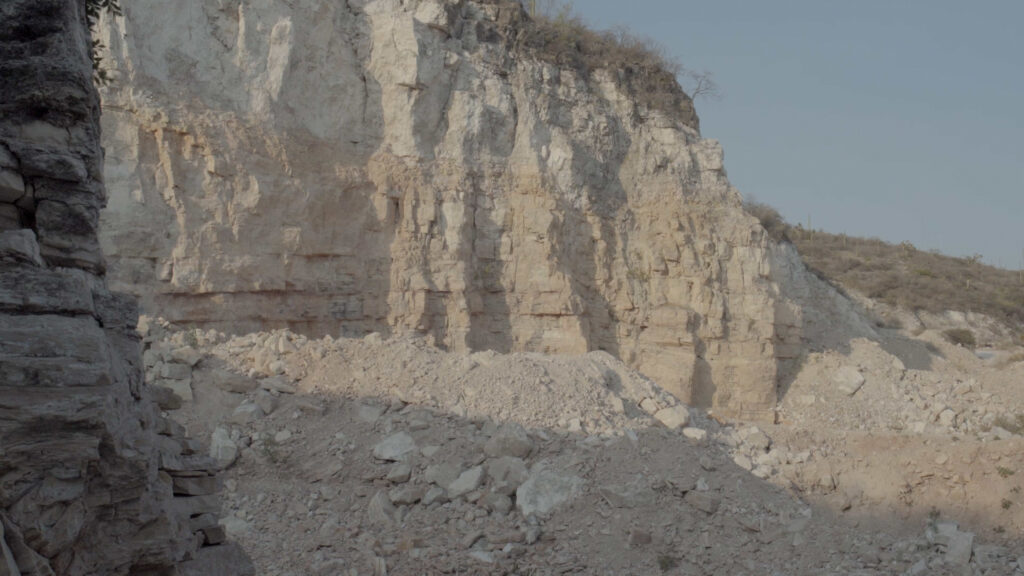
[Image: Lorena Mal, Piedra Partida, 2024-2025. HD video, color, 19′]
in earth shattering disasters
everything disappears and the stone writes
floods of human-made toxicity
we are in Torreón, north of Mexico
in a metallurgy
we listen to 70% zinc turned into sound frequency
22% iron
2% silver
[Permanentemente en proceso. Torreón, Coahuila, México. Archivo de Perla Mata]
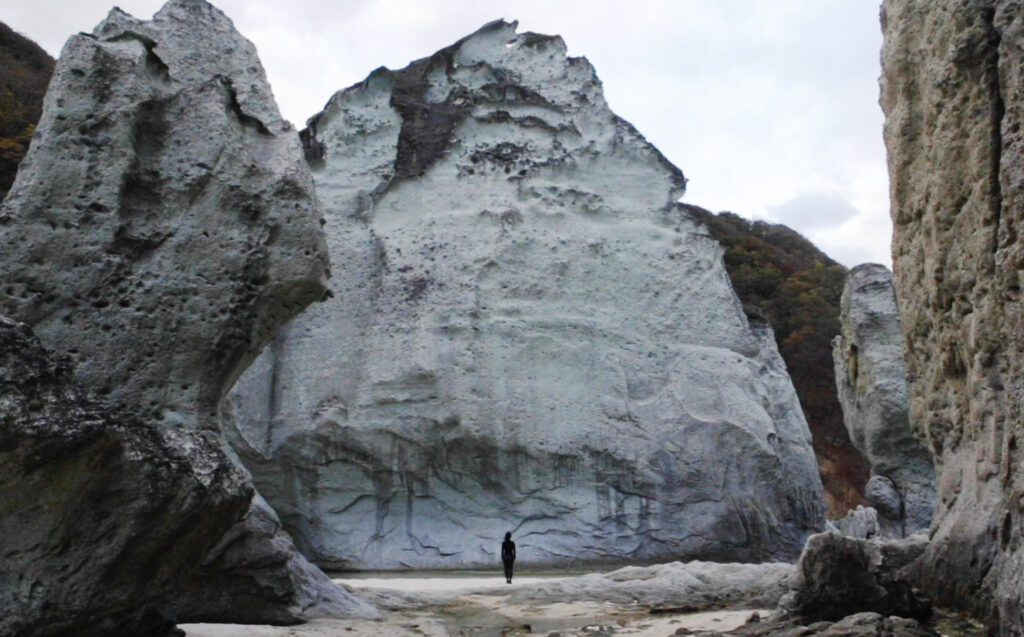
[Film Still ‘Spring Water, Fault, Body’ (2021) Hanae Utamura]
we are in Horonobe Japan
miles underground managing radioactive waste
in deep subsurface environments
we are still in the nuclear plant in Lithuania, still falling apart
a snake slithers over an abandoned mission control
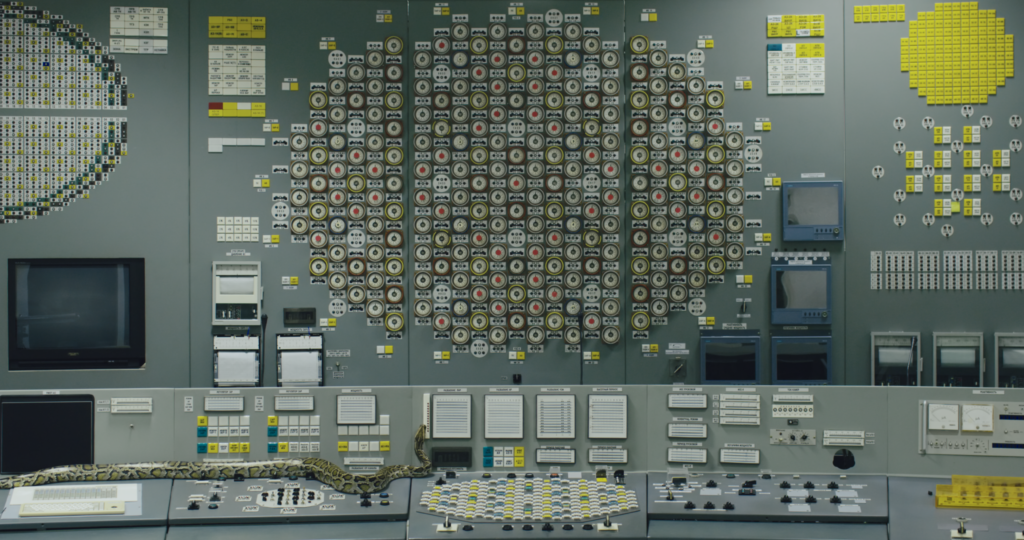
[Image: Emilija Skarnulyte, Burial, 2022. HD video, color, 60′]
In a dream
Tomorrow was Yesterday
Future was Past
A day
a week
a month
a year,
a hundred
a thousand
a million
billion
years
Says a voice through the tunnels
Fault means responsibility.
Whose fault is it?
Who is at fault
A fault in geology, is a crack in the Earth’s crust.
We are inside a fault in the Earth’s surface, breaking
here
together
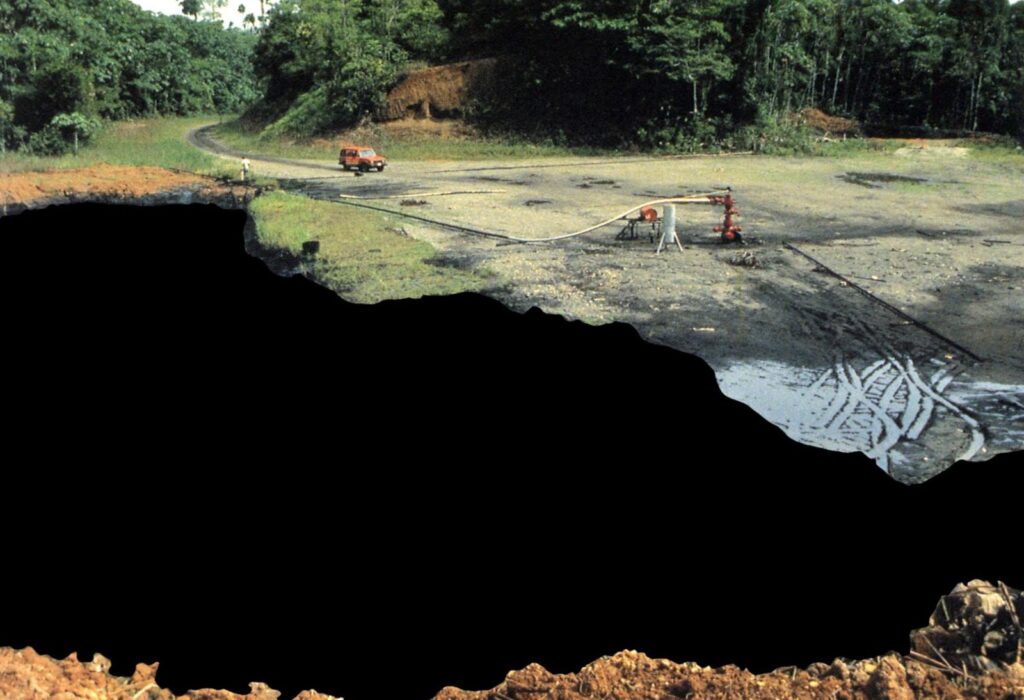
[imagen: Sofia Acosta, Onda, 2020.]
we receive telephatic messages
from the Ecuadorian Amazon
nightmares, which emerge from the underground
insisting again and again
there, where listening becomes territory
and territory becomes possibility for relation
the waves, like dreams, return
they circle around us
invisible radiowaves, invisible radiations, invisible tides
a circular temporality
water returning to water
soil returning to soil
we are inside the comixcal vessel from the Itsmo of Tehuantepec in Oaxaca
we are that rain that sounds like seeds falling
the void here is an open mouth
we listen to a distortion
krrr—krrr—piiiiii—piiii—beepbeep—shhhk—shhhk— krrrzzzt—wiiiiii—wiiiiii—fshhhhhhhh
it gets us closer to the amazonian territory
its organization
the rivers
the anger
the perseverance
and to the hope of all amazonian communities
that resist to displacement and looting
We listen to the soft echo of a violin singing Yanda Pullu
a song by Mishki Chullumbu, from the Napo Runa pueblo
6 decades of his life dedicated to rescue their memory and music
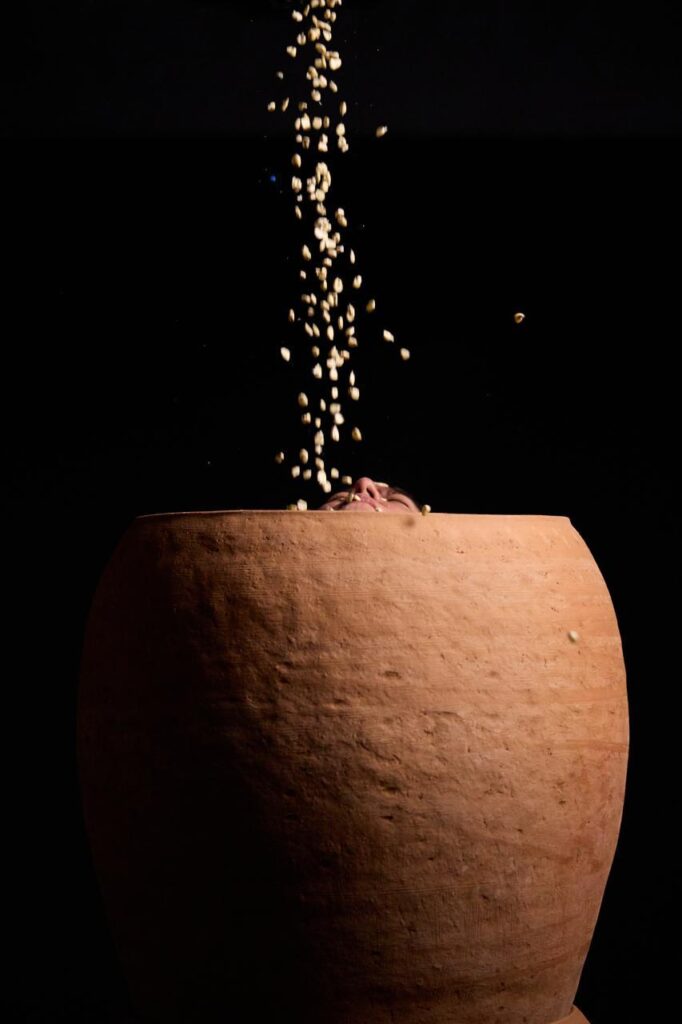
[imagen: Ana Hernández, Ná’ Reza [Mano Rota], 2025]
Like the rain, our hands hit the soil of the comixcal
we move our bodies as matter
when we are dead we will be compressed
and the Earth will take a new shape again
as she always does
the amplified sound of the memory of Earth story
the memory in erosion
the memory in burning
[Imagen: Material de archivo, Atlas Materia Prima]
coal breaks into steam with a train in the north of Mexico carrying construction materials
from a mountain to places
there’s rhythm and dance and destruction
there are machines
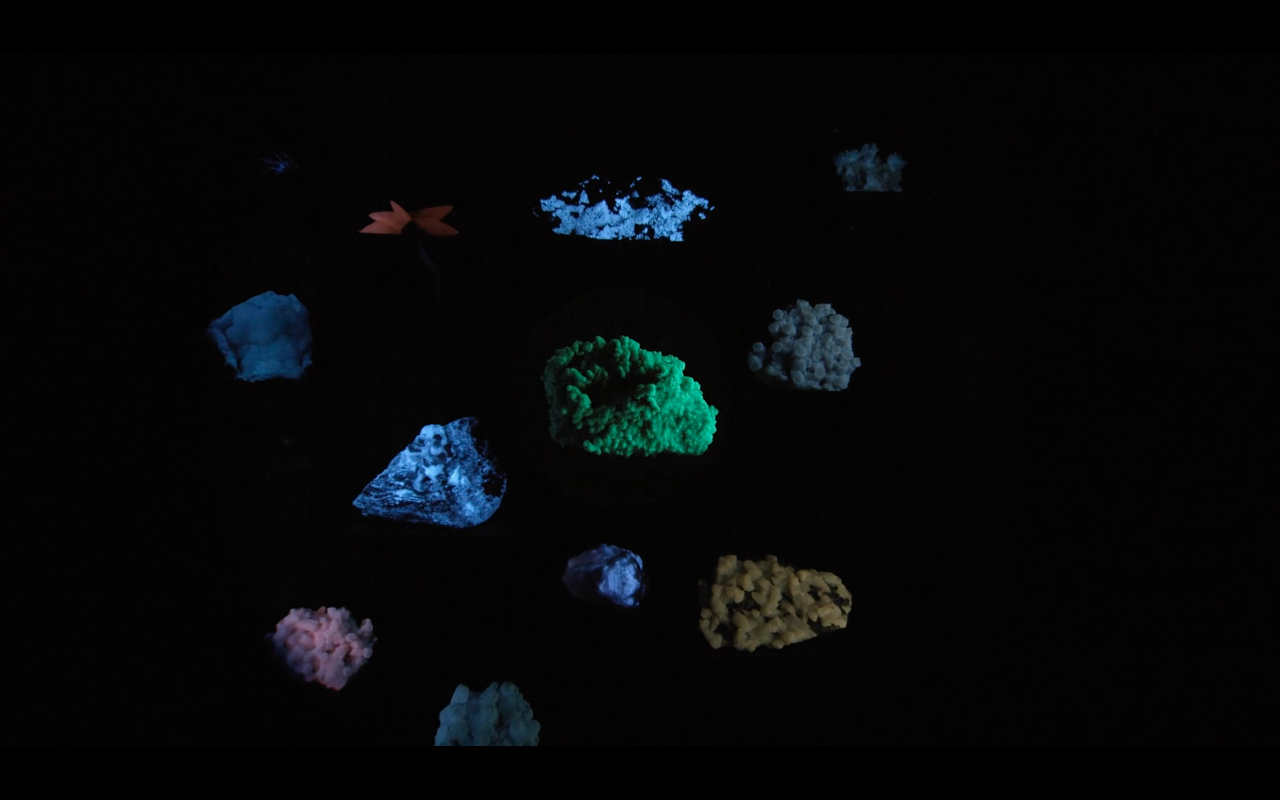
[Image: Emilija Skarnulyte, Burial, 2022. HD video, color, 60′]
there’s heat and sweat and flesh
there is pressure
1200 watts
interruptions of noise and profit
a new void opens
dynamite inside her body
the sound of a mountain dying
Lorena Mal
Zapotengo Oaxaca, June 2026
Script for ‘Revolutions on the Surface of the Earth’ assembled by Lorena Mal for a performative lecture based on conversations with and writings by Sofia Acosta, Carlos Edelmiro, Bárbara Foulkes, Ana Hernández, Concepción Huerta, Erika Loana (Atlas Materia Prima), Lorena Mal, Perla Mata, Anahita Norouzi, Loong Pan, Emilija Skarnulyte y Hanae Utamura.
Sobre Ana Hernández
Artista visual mexicana. Egresada de la
Escuela de Bellas Artes de Oaxaca, de las Clínicas de Especialización en Arte Contemporáneo CEACO, parte de su formación la recibió del Instituto de Artes Gráficas de Oaxaca (IAGO). Su amplia producción de obra abarca diversas técnicas que van desde la serigrafía hasta la talla en madera, e involucra lenguajes sonoros, textiles y visuales tradicionales del Istmo de Tehuantepec. La artista aborda temas como la migración, la lengua y la familia, a partir de intereses personales que se trasladan al intercambio de saberes de la comunidad. La obra de Ana Hernández representa una reivindicación del arte desde los pueblos originarios y su reflejo contemporáneo.
https://www.instagram.com/hernandez.ana.hernandez
Sobre Atlas Materia Prima (Erika Loana)
Arquitecta multidisciplinar que trabaja en la intersección entre la arquitectura, el arte y las instituciones culturales. Su práctica abarca el diseño de exposiciones, la producción artística y la investigación arquitectónica, centrándose en las ruinas, el paisaje y el territorio como prismas a través de los cuales examinar críticamente la relación de la arquitectura con su entorno. Desde 2020, desarrolla «Atlas Materia Prima», un proyecto de investigación crítica que documenta y saca a la luz la extracción de materias primas utilizadas en el sector de la construcción, cuestionando los verdaderos orígenes de la arquitectura.
https://atlasmateriaprima.net/
Sobre Anahita Norouzi
rtista multidisciplinar, originaria de Teherán y afincada en Montreal. Su práctica se basa en la investigación, se nutre de historias marginadas y se centra en temas como la extracción de recursos, el colonialismo y la relación entre los seres humanos y la tierra. A través de una amplia gama de materiales y medios —vídeo, escultura, instalación, fotografía—, su obra desafía la autoridad institucional al recuperar narrativas personales y memorias colectivas incrustadas en archivos, colecciones de museos y páginas de herbarios, analizando en última instancia cómo opera el poder a través de sistemas de clasificación, representación y borrado histórico.
https://www.anahitanorouzi.com/about/
Sobre Bárbara Foulkes
Artista, coreógrafa y gestora cultural. Desde 2021 coordina el Área Educativa y el Programa Público del Museo Diego Rivero Anahuacalli. Su trabajo está vinculado a la interdisciplina, la investigación y el arte educación. Entiende la coreografía como las relaciones que se establecen entre cuerpos e ideas, y traduce esto en una manera de pensar y de observar el mundo en términos de tensiones, fuerzas, contrapesos, balances y desbalances: en términos de acción, y, por lo tanto, de vida. Su obra performática es ritualista e ingrávida. Se acerca al dibujo, a la escritura y al video como una extensión de lo efímero, una manera de documentar la acción y volverla material de estudio sensible.
https://barbarafoulkes.com/
Sobre Carlos Edelmiro
Artista sonoro y escritor mexicano. Impulsado por una irremediable aversión a los cánones establecidos, su trayectoria se ha desarrollado entre el arte contemporáneo, la publicidad y la música. Su pasión por el sonido como fenómeno físico y cultural le ha llevado a explorar los vínculos entre la composición y la producción musical, así como la historia y la filosofía de los fenómenos auditivos, la ingeniería e incluso la política. Entre sus estudios destacan el programa de Ingeniería de Sonido en la SAE de Barcelona, el Máster en Música y Medios Audiovisuales en el Conservatorio Superior de Música de Cataluña y el Máster en Arte Sonoro en la Universidad de Barcelona. Es cofundador de colectivos como AjuaLab, Phonolab, Yutindudi y Chintete, en los que explora las relaciones entre la música, el sonido y la amistad.
http://www.sinewavelover.com/
Sobre Concepción Huerta
Artista sonora, realizadora audiovisual y fotógrafa. Su práctica se desarrolla en la intersección entre arte sonoro, medios audiovisuales e investigación artística. Estudió Medios Audiovisuales en el Centro de Arte Audiovisual (CAAV), Guadalajara (2006–2010). Ha formado parte de iniciativas como Speculative Sound Forensics y ha colaborado en proyectos de investigación artística como Recounting, junto a pamela varela y ella h. Su práctica explora el sonido desde su materialidad, integrando síntesis, grabaciones de campo, foley y procesos analógicos y digitales para construir narrativas especulativas que investigan la relación entre escucha, espacio y cuerpo.
https://concepcionhuerta.bandcamp.com/
Sobre Emilija Škarnulytė
Artista y cineasta nacida en Lituania. Moviéndose entre el documental y lo imaginario, Škarnulytė crea películas, instalaciones, esculturas, dibujos y obras multimedia inmersivas basadas en el tiempo que exploran la interrelación entre lo humano, lo ecológico y lo cósmico. Su obra se sitúa en el «tiempo profundo», abarcando épocas geológicas, arquitecturas submarinas y futuros post-antropocéntricos para examinar historias humanas y no humanas. Combinando lenguajes visuales poéticos y analíticos, Škarnulytė examina cómo las infraestructuras de poder —militares, ecológicas y mitológicas— se extienden hacia territorios invisibles e incognoscibles del abismo oceánico, la materia cósmica y la memoria.
Sobre Hanae Utamura
Artista y educadora interdisciplinaria japonesa con sede en Nueva York y Tokio. Utamura trabaja en varios medios, incluidos video, performance, instalación y escultura. Su obra busca conectar a las personas con la tierra, utilizando el cuerpo físico como conducto, con especial atención a las tensiones y negociaciones entre lo humano y lo no humano, centrándose en la toxicidad y la espiritualidad. Ha actuado y exhibido extensamente en todo el mundo, incluido el Museo de Queens, el Museo de Brooklyn, la Galería Estatal Tretyakov en Moscú y la Bienal de Arte Asiático en el Museo Nacional de Bellas Artes de Taiwán. Su trabajo ha sido apoyado por numerosas residencias y becas desde Berlín hasta Seúl y Santa Fe, y ha recibido premios de organismos que incluyen el Programa de Amistad entre Estados Unidos y Japón, el Ministerio de Cultura de Japón y la UNESCO.
https://www.hanaeutamura.com/
Sobre Long Pan
Artista contemporánea interdisciplinar cuya práctica se desarrolla en paralelo entre la investigación de campo y el trabajo de laboratorio. Su investigación se centra en la biorremediación y la biopolítica, con el objetivo de revelar las relaciones ambientales y existenciales ocultas, ignoradas o deliberadamente borradas dentro de la sociedad industrial contemporánea, a través de la perspectiva de organismos no humanos, como hongos y plantas. Su trabajo no es una simple denuncia ecológica; más bien, intenta establecer un contrato de percepción multiespecie y polifónico que restaure el espacio para que las vidas y relaciones largamente excluidas sean escuchadas, discutidas y respondidas.
https://longpanstudio.com/
Sobre Lorena Mal
Artista interdisciplinaria mexicana que vive y trabaja entre México y los Países Bajos. Su obra conecta las artes visuales, la música y la historia material a través de instalaciones,video y performance sonoro. Su investigación integra diversos métodos de registro, archivo y colaboración entre comunidades, territorios y disciplinas, trabajando con las dinámicas de preservación, transformación y destrucción que determinan la memoria y el paisaje.
Sobre Perla Mata
Artista visual. Su práctica explora las temporalidades del metal y su escala industrial en relación con los procesos de extracción y transformación minera y metalúrgica. Recolecta minerales y metales residuales de su región de origen, con los que busca, desde la pintura, la instalación, la acción y el texto, aproximaciones sensibles y críticas a los territorios y sus materialidades. Cuenta con una Maestría en Artes Visuales por la UNAM y forma parte del Programa Educativo SOMA (2025–2027). Ha participado en exposiciones en México, Alemania y Estados Unidos.
https://www.instagram.com/pmatachairez
Sobre Sofia Acosta
Artista visual, mamá y activista (ecuatoriana radicada en la Ciudad de México). Su práctica es una apuesta estética y política que cuestiona las narrativas dominantes de género mientras propone aproximaciones sensibles al posextractivismo y desafía las nociones de territorio contemporáneas. Su obra se materializa en una práctica interdisciplinaria que incluye instalaciones, publicaciones independientes, video analógico e intervención de fotografías, archivos, cartografías y testimonios. Actualmente, junto a Anamaría Garzón y Francisco Hurtado, coordina el proyecto de investigación editorial y multimedia Estado Fósil, que dialoga con el archivo de los más de 50 años de la extracción petrolera en la Amazonía ecuatoriana, desde diversas aproximaciones artísticas.
https://www.lasuerte.art/
About Ana Hernández
Mexican visual artist. She graduated from the
School of Fine Arts of Oaxaca and the Clínicas de Especialización en Arte Contemporáneo CEACO, and received part of her artistic training at the Institute of Graphic Arts of Oaxaca (IAGO). Her extensive body of work encompasses a wide range of techniques, from screen printing to wood carving, and incorporates the traditional sonic, textile, and visual languages of the Isthmus of Tehuantepec. Through her practice, the artist addresses themes such as migration, language, and family, drawing from personal interests that evolve into the exchange of knowledge within the community. Ana Hernández’s work represents a reaffirmation of art from Indigenous communities and its contemporary expressions.
https://www.instagram.com/hernandez.ana.hernandez
About Atlas Materia Prima (Erika Loana)
Multidisciplinary architect working at the intersection of architecture, art, and cultural institutions. Her practice spans exhibition design, artistic production, and architectural research — with a focus on ruin, landscape, and territory as lenses to critically examine how architecture relates to its environment. Since 2020, she has been developing Atlas Materia Prima, a critical research project that documents and makes visible the extraction of raw materials used in the construction industry, questioning where architecture truly comes from.
https://atlasmateriaprima.net/
About Anahita Norouzi
Multidisciplinary artist, originally from Tehran and active in Montreal. Her practice is research-driven, informed by marginalized histories, focusing on themes of resource extraction, colonialism, and the relationship between humans and land. Articulated across a range of materials and mediums—video, sculpture, installation, photography—her work challenges institutional authority by reclaiming personal narratives and collective memories embedded in archives, museum collections, and herbarium pages, ultimately dissecting how power operates through systems of classification, representation, and historical erasure.
https://www.anahitanorouzi.com/about/
About Bárbara Foulkes
Artist, choreographer and cultural manager. Since 2021, she has coordinated the Educational Area and the Public Program of the Diego Rivero Anahuacalli Museum. Her work is linked to interdisciplinarity, research and education art. She understands choreography as the relationships established between bodies and ideas, and translates this into a way of thinking and observing the world in terms of tensions, forces, counterweights, balances and imbalances: in terms of action, and, therefore, of life. Her performance work is ritualistic and weightless. She approaches drawing, writing and video as an extension of the ephemeral, a way of documenting action and turning it into sensitive study material.
https://barbarafoulkes.com/
About Carlos Edelmiro
Mexican sound artist and writer. Possessed by an irremediable allergy to standards, his career has moved between contemporary art, advertising, and music. His passion for sound as a physical and cultural phenomenon has led him to explore the links between musical composition and production, as well as the history and philosophy of aural phenomena, engineering, and even politics. His studies include the Audio Engineer program at SAE Barcelona, the Master’s in Music and Audiovisual Media at the Catalonia College of Music, and the Master’s in Sound Art at the University of Barcelona. He is co-founder of such collectives as AjuaLab, Phonolab, Yutindudi, and Chintete, in which he explores the relationships between music, sound, and friendship.
http://www.sinewavelover.com/
About Concepción Huerta
Sound artist, audiovisual creator, and photographer. Her practice unfolds at the intersection of sound art, audiovisual media, and artistic research. She studied Audiovisual Media at the Centro de Arte Audiovisual (CAAV) in Guadalajara (2006–2010). She has been involved in initiatives such as Speculative Sound Forensics and has collaborated on artistic research projects such as Recounting, alongside Pamela Varela and Ella H. Her practice explores sound through its materiality, integrating synthesis, field recordings, foley, and both analog and digital processes to create speculative narratives that investigate the relationship between listening, space, and the body.
https://concepcionhuerta.bandcamp.com/
About Emilija Skarnulyte
Lithuanian-born artist and filmmaker. Working between documentary and imaginary realms, Škarnulytė makes films, installations, sculptures, drawings, and immersive time-based media that explore the entanglement of the human, the ecological, and the cosmic. Her work inhabits deep time, spanning geological epochs, submarine architectures, and post-anthropocentric futures to examine human and non-human histories. By combining poetic and analytic visual languages, Škarnulytė examines how infrastructures of power—military, ecological, and mythological—extend into unseen and unknowable territories of oceanic abyss, cosmic matter, and memory.
About Hanae Utamura
Japanese interdisciplinary artist and educator based in New York, Berlin and Tokyo. Utamura works in various media, including video, performance, installation and sculpture. Utamura’s research centers around the questions on modernity, ecology and technology. Often working closely with specific sites, her project explores the cultural relationship to nature, focusing on how we imagine, experience, and affect the natural world. Negotiations between the human and the non-human, and how all the varieties of the wills of life manifest are the central focus of her practice. She has performed and exhibited extensively around the world, including the Queens Museum, the Brooklyn Museum, and the Asian Art Biennial at the National Taiwan Museum of Fine Arts. Her work has been supported by numerous residencies and fellowships including ISCP, Künstlerhaus Bethanien, the Japanese Ministry of Culture, and UNESCO, among others
https://www.hanaeutamura.com/
About Long Pan
Interdisciplinary contemporary artist whose practice runs parallel between field-based research and laboratory work. Her research focuses on bioremediation and biopolitics, aiming to reveal the hidden, overlooked, or deliberately erased environmental and existential relationships within contemporary industrial society, through the perspective of non-human organisms such as fungi and plants. Her work is not a simple ecological exposé; rather, it attempts to establish a multispecies, polyphonic contract of perception that restores space for long-excluded lives and relations to be heard, discussed, and responded to.
https://longpanstudio.com/
About Lorena Mal
Mexican interdisciplinary artist, lives and works between Mexico and the Netherlands. Her work connects visual arts, music and material history through installation, film, and sound performance. Her research integrates diverse methods of recording, archival and collaboration between communities, territories and disciplines, working with the dynamics of preservation, transformation and destruction that determine memory and Landscape.
About Perla Mata
Mexican visual artist. Her practice explores the temporalities of metal and its industrial scale in relation to the processes of mining extraction and metallurgical transformation. She collects minerals and residual metals from her region of origin, using painting, installation, performance, and text to develop sensitive and critical approaches to territories and their materialities. She holds an MA in Visual Arts from the National Autonomous University of Mexico (UNAM) and is part of the SOMA Educational Program (2025–2027). Her work has been exhibited in Mexico, Germany, and the United States.
https://www.instagram.com/pmatachairez
About Sofia Acosta
Visual artist, mother, and activist (an Ecuadorian based in Mexico City). Her practice is both an aesthetic and political commitment that questions dominant gender narratives while proposing sensitive approaches to post-extractivism and challenging contemporary notions of territory. Her work takes shape through an interdisciplinary practice that includes installations, independent publications, analog video, and interventions of photographs, archives, cartographies, and testimonies. Currently, together with Anamaría Garzón and Francisco Hurtado, she coordinates “Estado Fósil”, an editorial and multimedia research project that engages with the archive of more than 50 years of oil extraction in the Ecuadorian Amazon through diverse artistic approaches.
https://www.lasuerte.art/